 Class
22: Friday 10/30 or
Monday 11/2
Warm Up:
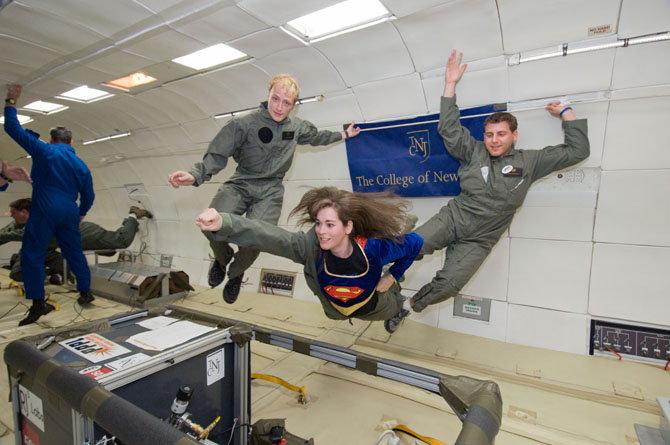
1. How does NASA simulate a zero g environment?
2. What's wrong in the video?
Today:
- Check/review homework
- Today's notes and practice: handout p.4-5 -- Video from last class two years ago
- Last rocket launch
Homework:
- Complete Part 5 of the project (predicting final flight time) before tomorrow.
 Class
21: Wednesday 10/28 or
Thursday 10/29
Warm Up:
1. At exactly the same time, one ball is launched horizontally and another is dropped from rest. How do their fall times compare? Why? What is the big lesson from this?
2. What happens if you rig a ball to be launched straight up from a cart, and you then launch the ball while the cart is moving at a constant speed?

3. Do you know SohCahToa? If you don't, visit Khan Academy to learn about basic trigonometric functions. Or you can watch the informal little video that I made.
Today:
- I am working on grading the projects. They will be done by Friday afternoon, since that is the grading deadline.
- If you did not turn in your hard copies of the drawings and/or graphs last class, turn them in now. Hopefully you already sent me scans to confirm that they were done by the deadline.
- Intro to the new unit(s):
- Projectile motion / 2D motion and forces
- Vector addition and subtraction
- Trig functions
- New kinematics equations added to your formula sheet (to reduce the number of steps in solving a problem)
- Projectile motion
- Projectile motion / 2D motion and forces
- Today's notes and practice: handout p.1-3 -- Video from last class two years ago
- Work time -- fix up rockets to make them stay in the air as long
as possible. Primary improvements available
- Parachute deployment -- smarter packing, better
- The final launch will be next class, weather permitting. Sign up for FLEX if you want some extra rocket work time.
Homework:
- Complete Part 5 of the project (predicting final flight time). Even if you are not actually going to launch again, still complete part 5, showing how you could change your rocket to make it stay in the air longer. This is due at midnight after next class.
- Finish the vector addition problems on page 3 of the new handout 2025 Unit 2 Handout (PDF) 2025 Unit 2 Answer Key.
 Class
20: Monday 10/26 or
Tuesday 10/27
Warm Up:
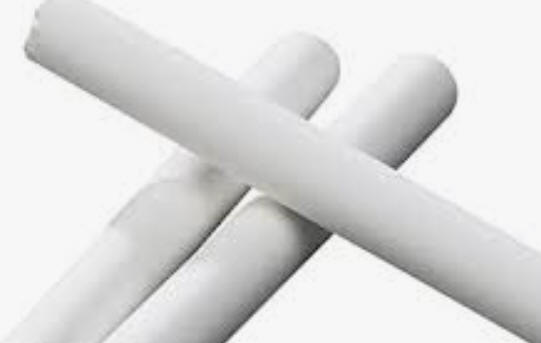
1. What is the terminal velocity of a chunk of chalk?
2. What are clouds? Why don't they fall out of the sky?
3. Sometimes people celebrate special occasions by firing guns into the air. Is this safe?
Calculated terminal velocities of various spheres.
Today:
- Parts 1-4 of the Rocket Project are due today (Monday for A5/6 or Tuesday for B5/6). Turn in your drawings and graphs in person or turn in scans by midnight and give me the hard copy tomorrow.
- Next class, you will have at least 30 minutes of rocket work time. Your homework will be to complete part 5 of the project -- predicting your 2nd launch flight time.
- The final launch will be during the class after next, weather permitting. Sign up for FLEX if you want some extra rocket work time.
Homework:
- A5/6 -- Submit both of your rocket project spreadsheets by midnight on Monday.
- B5/6 -- Submit both of your rocket project spreadsheets by midnight on Tuesday.
- Begin Part 5 of the project (predicting final flight time) -- this will also be homework for next class.
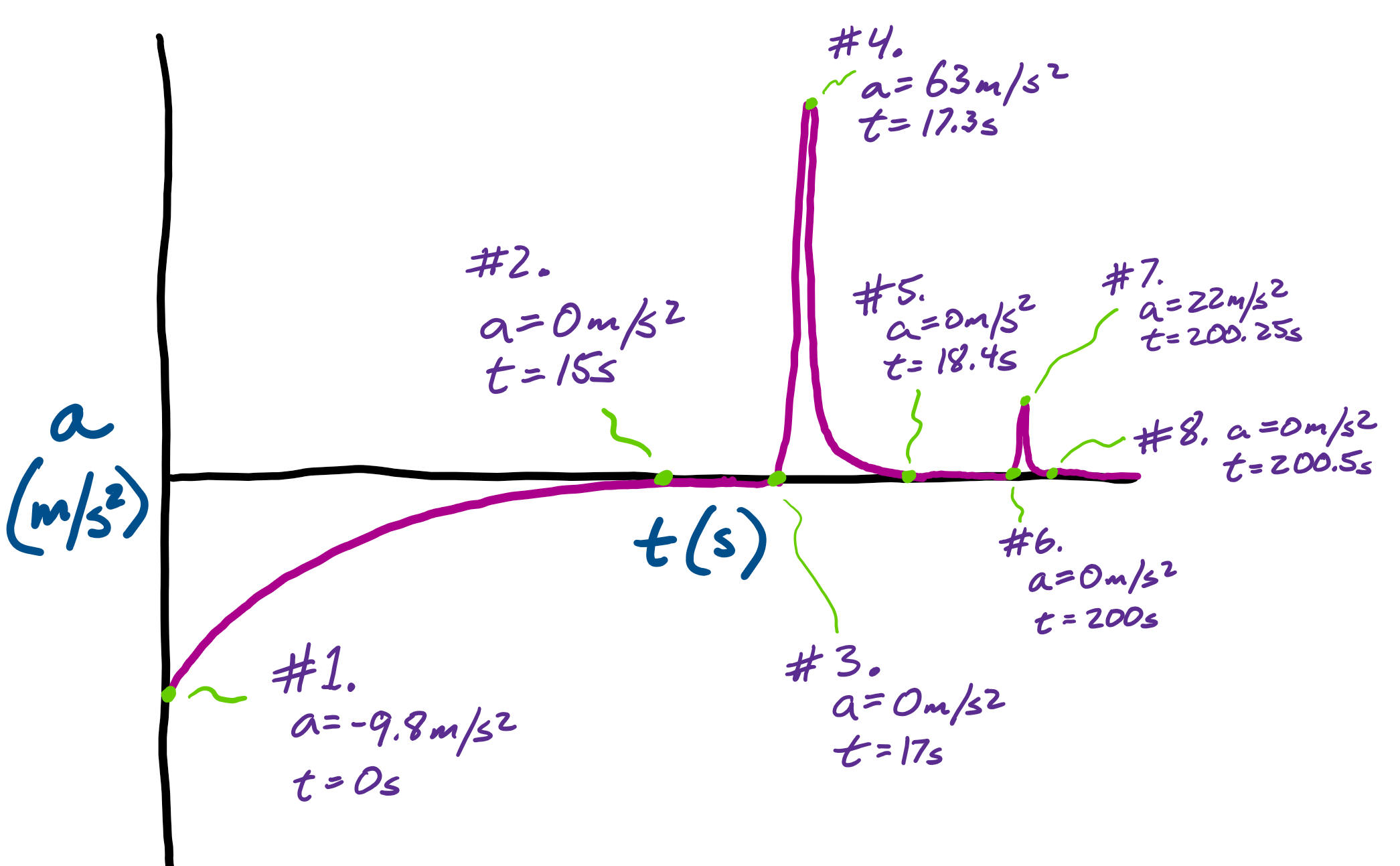
Warm Up: The acceleration vs. time graph below describes the motion of a skydiver. This is the type of format that I would like you to use for your motion graphs. 1) What is technically wrong with the graph? 2) What does the graph get right? 3) What is going on at each of the 8 numbered points in time?
Today:
- Reminder of extra help video, for anyone who wants to make sure they're doing the snapshot calculations correctly.
- Deadline change: the entire project will be due on the last day of the quarter (
- Get the desks back on the dots
Homework:
- Parts 1-4 of the Water Rocket Projects are due on the last day of the quarter (Monday for A5/6, Tuesday for B5/6)
- Part 5 (new rocket design to beat 28 seconds) is due on the last day of the quarter. Hopefully we will launch again soon after that.
- If you are behind on the rocket stuff, catch up.
Warm Up: B5/6 -- skip the warm-up, due to the shortened schedule.
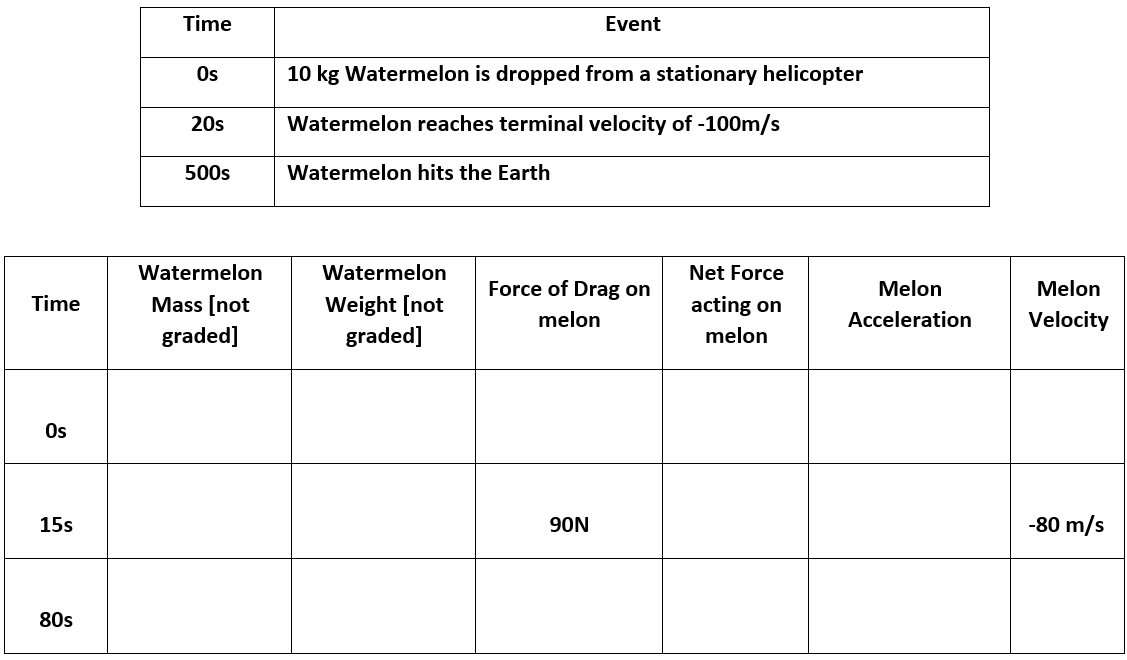
A5/6 -- Fill out the missing parts of the bottom table below, basing your answers on the descriptions in the top table.
Today:
- Point out a few organizational changes.
- Point out the extra help, for anyone who wants to make sure they're doing the snapshot calculations correctly.
- Make sure that everyone has what they need in order to work on the project. If you're done with these, work quietly while the rest of us work on them.
- Look at example prediction of 2nd flight performance?
- Project work time --
- Work on the snapshots and their calculations (Step 12 of the Instructable).
- Point out the note about net force in snapshot 2
- Work today and next class -- and at outside class if necessary.
- Get the desks back on the dots
Homework:
- Parts 1-4 of the Water Rocket Projects are due on Thursday.
- Part 5 (new rocket design) is due on Tuesday, 10/27 -- the last day of the quarter.
- If you are behind on the rocket stuff, catch up.
Warm Up:
1. Paying close attention to what is happening to the slope (but not worrying about the correct scale), sketch a height vs time graph for a rocket that...
-
Reaches its apogee at a height of 75m and a time of 3.2 seconds
-
Has a medium-large parachute that fully deploys at a time of 6.2 seconds and height of 55m
-
Lands at a time of 22s.
2. Label important moments in the flight
-
End of thrust
-
Apogee
-
Beginning of parachute deployment
-
Beginning of terminal velocity
-
crashdown
Today:
- A 5/6 -- Check the paper homework that I forgot to check last class.
- Rocket Project Information (PDF)
- Project work time
Homework: If you are behind on the rocket stuff, catch up.
 Class
16: Monday 10/12 or
Tuesday 10/13
Warm Up:
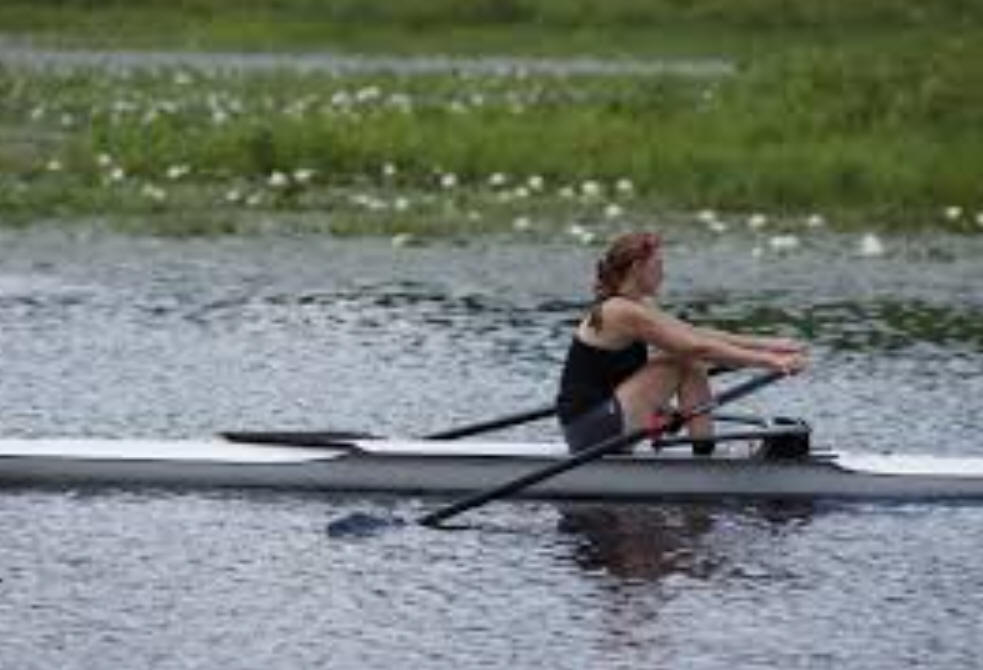
The rower in the photo has a mass of 50kg and a leftward acceleration of 1m/s2. She is pulling the two oars leftward with a total force of 100N.
1. Sketch a diagram showing all of the forces acting on the rower.
2. Find all of the forces' magnitudes.
Today:
- Check/review homework
- Retakes are graded, but a few students need to finish theirs up, so I am not passing them back today. If you want to see yours, drop by FLEX tomorrow. I hope to return them soon.
- Finish Drag notes
- Rocket Project Stuff: You will be analyzing your first launch
and predicting your second launch.
- Collect analyze the last bit of rocket data -- full flight time data and descent.
- Fit the data to your spreadsheet -- end of thrust to chute deployment.
- Rocket Project clarification -- look at the "Rocket Project Turn-In" in Google Classroom.
- Work time. Start working on the snapshots. I will handout the graph templates next class.
Homework:
- If your group is behind in the rocket project, catch up.
- If you're worried your group might fall behind, get ahead by working on the "snapshots of moments during flight"
Warm Up: None -- test retake day
Today:
- Work Time
Homework:
- Homework Due Next Class (Monday or Tuesday):
- Modeling Water Rocket Flight With Drag
-
Water Rocket Spreadsheet Analysis Practice
 Class
14: Tuesday 10/6 or
Wednesday 10/7
Warm Up: Newton's 3rd Law tells us that forces always come in pairs, and that each force in a pair is equal to and opposite the other.
1. If that's true, how do you win at the game of tug of war?
2. If we assume that each child in the photo has a mass of 30kg, that the rope is massless, and that both teams and the rope are accelerating leftward at 0.1m/s2 (i.e. the left team is winning), can we draw all of the forces acting on the system of the 6 kids + rope?
Today:
- Check/review homework
- Notes:
Video
from class
- Newton's 3rd Law
- Drag -- problem #4 on p. 26
- Discuss the parts of the rocket project (the homework will
prepare you for step 3):
- Make and launch rockets and collect data
- Analyze the thrust phases of the rocket's flight to numerically describe motion and forces.
- Analyze the coasting phase of the rocket's flight to numerically describe motion and forces.
- Analyze the parachute and touch-down phases of the rocket's flight.
- Use data from these analyses to create a visual and numerical model of the rocket's motion -- and the forcesit experiences -- during its entire flight.
- Why spreadsheets? Why don't we just use pencil and paper?
Homework:
- Test retake next class
- Homework Due class after next (Monday or Tuesday): Modeling Water Rocket Flight With Drag
 Class
13: Friday 10/2 or
Monday 10/5
Warm Up:
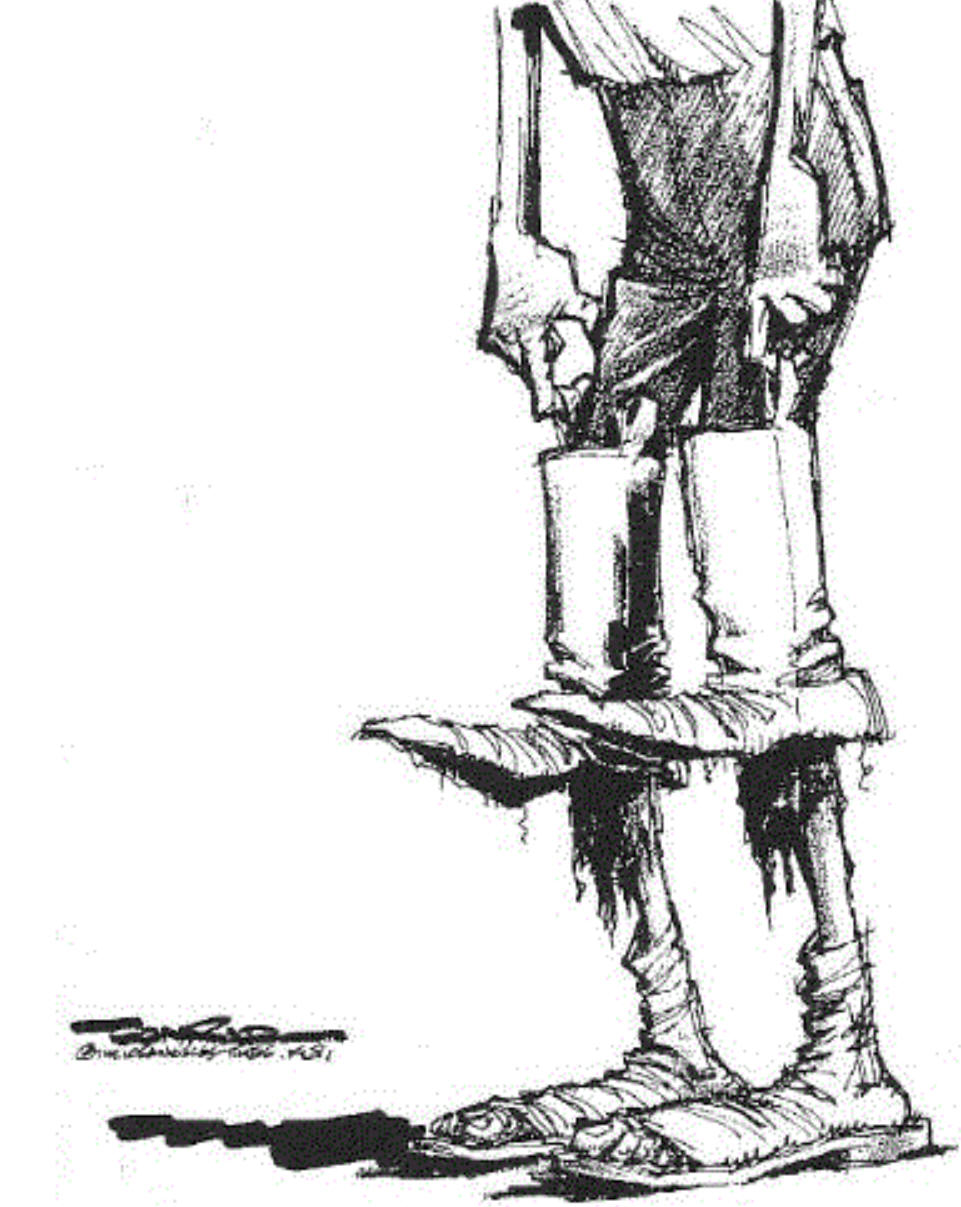
1. Is it literally possible to "pull yourself up by your own bootstraps?" Put another way, can you pick yourself up? Explain.
2. How fast is 40,000 yards per day? Use dimensional analysis to convert it first to m/s and then to mph. What is the mathematical justification for this process?
Today:
- Return tests
- A5/6 -- talk about max velocity data -- our time to the end of air thrust was probably wrong, but it doesn't matter right now. Next time we should get it right.
- Spreadsheet and motion/forces practice -- finish filling out the green and blue cells on the sheet we started last class
- Optional test retake during class next Thursday (A5/6) or Friday (B5/6). There will be a long homework assignment that day. If you are not retaking the test, you can work on it during the test. If you are retaking the test, you will need to complete it at home.
Homework:
- Spreadsheet problem -- launching a student complete and then turn in via Google Classroom
 Class
12: Wednesday 9/30 or
Thursday 10/1
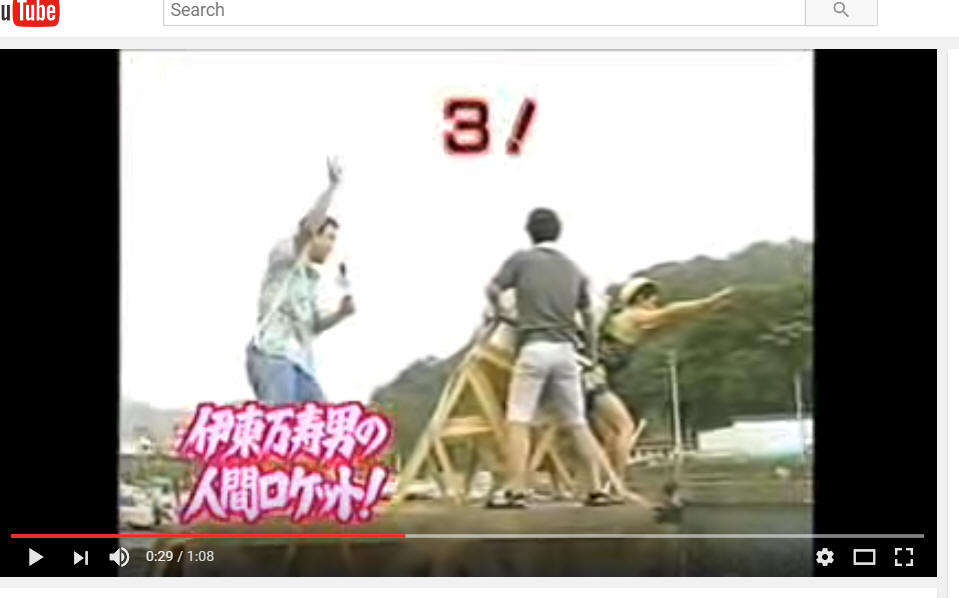
Warm Up: Is this for real? Could we launch a student this high with water rockets?
Today:
- Return tests next class -- sorry; there are still a lot of tests out
- A5/6 -- I fixed the problem with the force plate spreadsheet (todetermine jump height)
- Rocket Thrust Force Analysis -- collect data together
- Make your own copy of the spreadsheet provided in Step 7 of the Water Rocket Project Instructable
- Open Vernier Video analysis
- Follow my lead as we collect data
- Complete the calculations for homework.
- Later we can calculate how high a student would go if we launched them with as many bottles as they used in the video.
Homework:
- No homework if you were in class.
- If you missed class, follow the instructions in step 7 of the instructable to complete rows 2-15 of the spreadsheet.
Warm Up: None
Today:
- Test
- If you want to maximize your chances for partial credit, clearly show your starting formula(s) and all of your steps.
- For all problems, include correct units.
- The bonus is optional.
Homework:
- None
 Class
10: Thursday 9/24 or Friday
9/25
Warm Up:
We have a force plate that will give us a graph of force vs time. We will have someone stand on the plate, and then we will zero the sensor while they are standing still. Then we will collect data while they jump as high as possible and land back on the sensor.
1. Since we have zeroed the sensor while the student is standing on it, what will the graph of force vs time look like when they jump, fly, and land?
2. What will that graph actually show us?
3. How can we use data from the graph to determine the height of their jump?
Today:
- Take a look at some rocket videos. You should have access to this folder.
- Check/review homework.
- Test Review
- Format
- More practice?
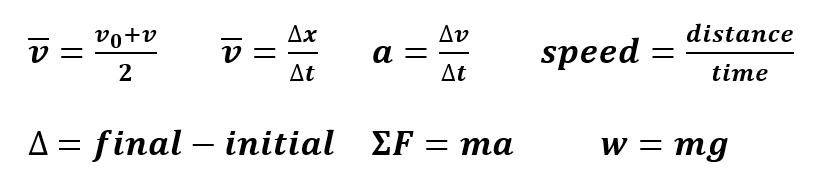
- Formula sheet...
=Homework:
- Prepare for the test
- Discuss this question with your self, friends, and/or family... Newton's 3rd Law correctly states that every force has an equal an opposite force. This means that, in a game of tug-of-war, each team pulls against the other team with exactly the same force. So how do you win a game of tug-of-war?
 Class
9: Tuesday 9/22 or Wednesday
9/23
Warm Up: **Reminder: Record the current air pressure and outside temperature.**
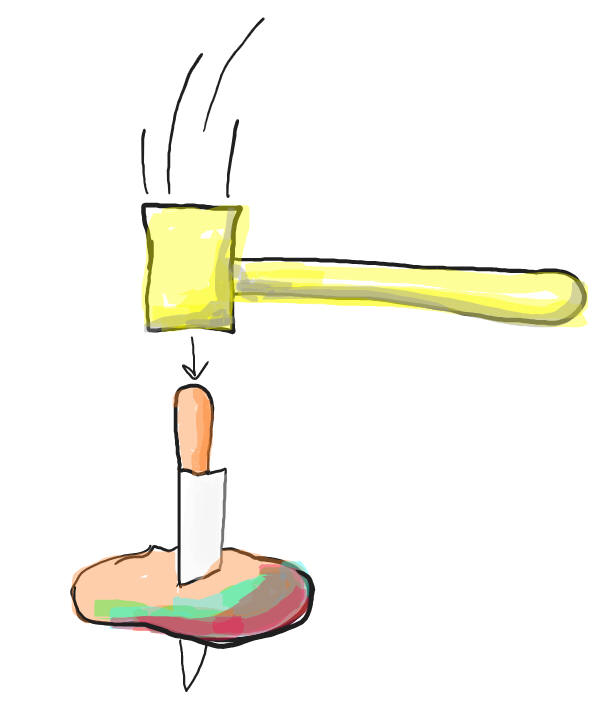
What will happen if I poke a knife through a potato, hold both objects in the air with the knife pointing downward, and then hammer the butt of the knife into the potato? Why? What if it's an apple, because I didn't have potatoes?
Today:
- Check/review homework.
- Launch Rockets (weather permitting)
- Record your dry mass using the balance on the front desk (tare the green tray).
- Add water to your rocket, and record your water volume, in ml
- Have Mr. Stapleton check your rocket's nozzle diameter (and enlarge if necessary)
- Return rockets to storage
- Finish practice test#2.
Homework:
- **Helpful Hint: On the bottom of page 2 of the practice test, you will be asked to graph acceleration. Graphing acceleration can be tricky, but it's easy if you graph velocity first and then use your velocity graph to do the acceleration graph.
- Complete the rest (p. 1-3) of Practice Test #2 (PDF) Solutions to Practice Test #2
 Class
8: Thursday 9/17 or Friday 9/18
Warm Up:
1. If you don't put any water in a water rocket, it won't go very high. Why?2. If you put too much water in a rocket, it won't go very high. Why?
3. What is the purpose of the water in a water rocket?
*This simulator purports to tell one how much water is best. Try it if you wish.
Today:
- Check/review homework.
- B5/6 -- check/review homework from the last two classes.
- Finish building rockets.
- Work on practice test
Homework:
- Complete the problems (1-5 on pages 3-6) of Practice Test #2 (PDF) Solutions to Practice Test #2
 Class
7: Tuesday 9/15 or Wednesday 9/16
Warm Up:
We're about to watch a feather and a bowling ball falling in the world's largest vacuum. What will we see?Today:
- A5/6 -- Check/review homework. Do an example problem together? -- half of #7 on p. 16
- If we have some time...
- Take a look at the rough plan for the next few classes. Weather may change things.
- Physics 200 Student interest survey results
- If you want to try to splice bottles together, email me by the end of class on Wednesday. I would need to buy materials and bring them in. You should come to FLEX to do the splicing. We will launch twice, so you don't have to finish the spliced rocket by the first launch..
- Build rockets. Follow the instructions in Step 1 of the Instructable
Homework:
- Two Parts:
- Practice problems 5-8 on p. 16 Video help with the problems
- Page 22 -- First page of practice test
- Test soon over 1-16, 21, 23, and 25 of the handout. Maybe the end of next week; probably the beginning of the week after that.
 Class
6: Friday 9/11 or Monday 9/14
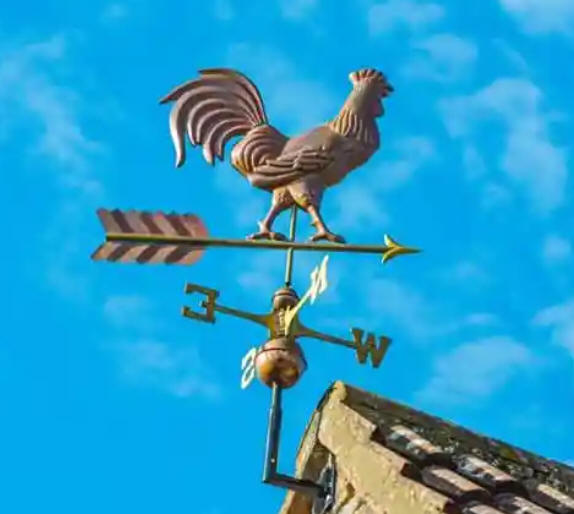
Warm Up:
1. What does a weather vane do?
2. How is a rocket like a weather vane? How is it different?
Today:
- Forces -- Notes p.12-13: Newton's 1st and 2nd Laws of Motion in Unit 1 Handout (PDF)
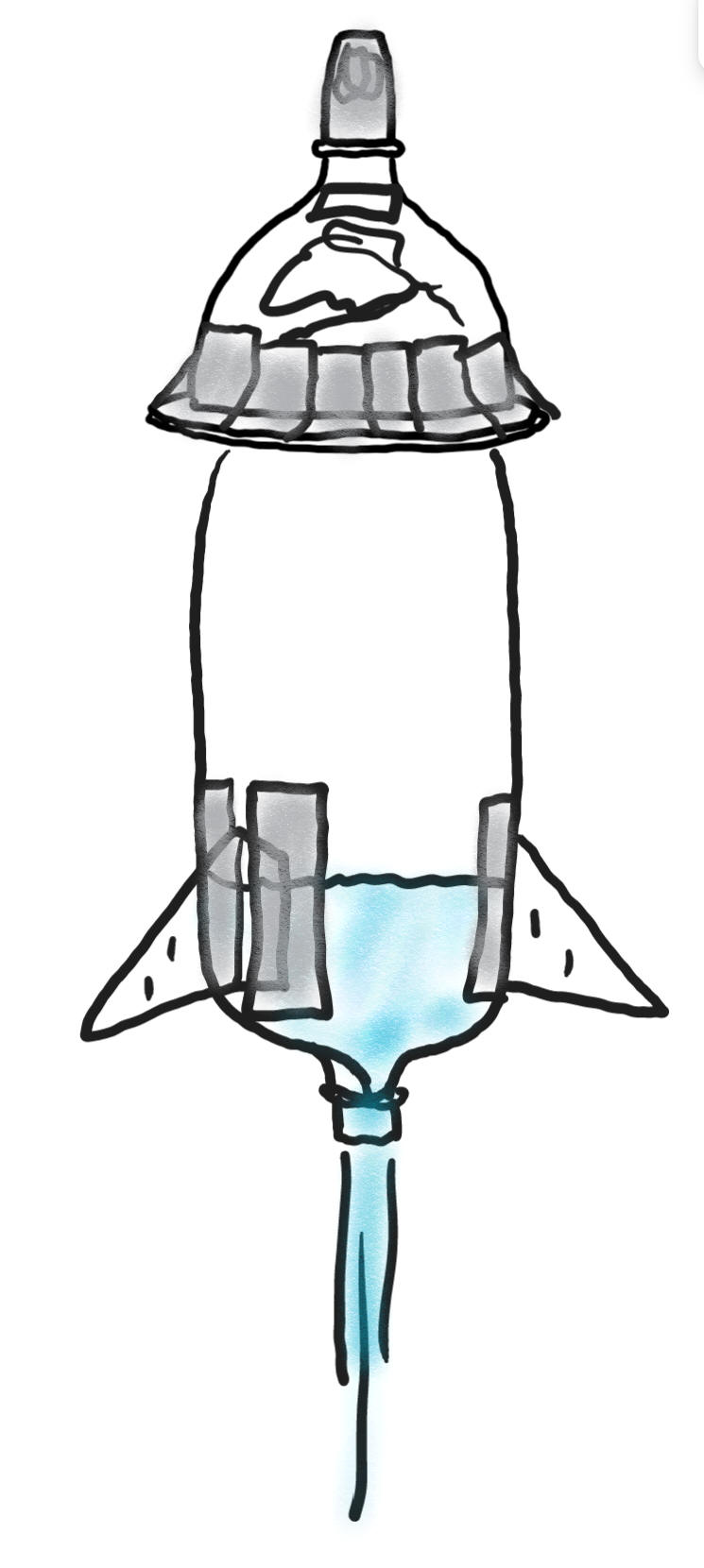
- Rocket Project:
- Look at an example flight from last year
- Begin building rockets -- make a simple one this time.
Follow the instructions in
Step 1 of the Instructable

Homework:
- Practice problems 1-4 on p. 15 Video help with the problems Answer Key to Entire Handout
 Class
5: Wednesday 9/9 or Thursday
9/10
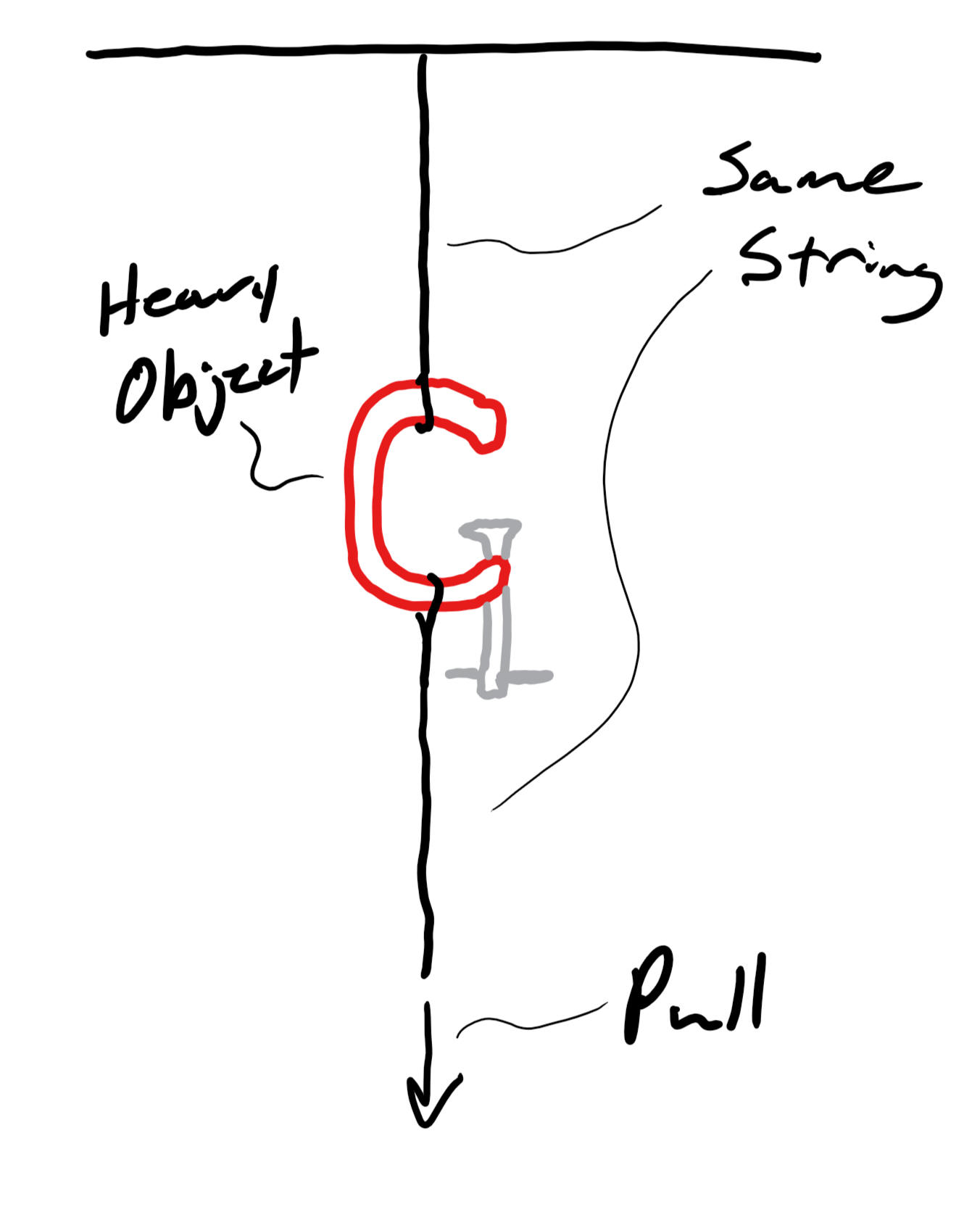
Warm Up: There is a heavy object suspended from the ceiling by a string. Another segment of the same string is hanging downward from the object. I am going to pull on the bottom string until one of the two strings breaks. Which string is going to break first? Why?
Today:
- What are we doing here? What's the point of this class? Preview of the year (look at 2021-20222)
- Check/review homework
- Review the dynamics cart activity -- pick students to tell me how to demonstrate the motions.
- Make sure that the top of page 9 is filled out
- Forces -- Notes p.12-13: Newton's 1st and 2nd Laws of Motion
- Next class will be mostly rocket construction.
- B5/6 -- finish slideshow?
Homework:
- No homework
 Class
4: Thursday 9/3 or Tuesday 9/8
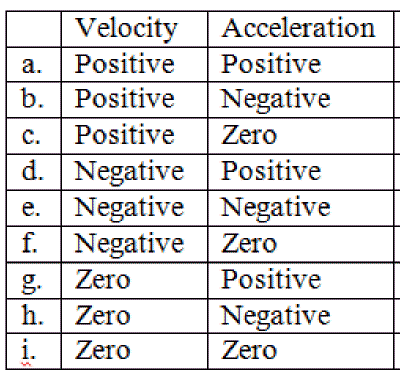
Warm Up: Mr. Chase once said that there are 9 types of motion...
1. For letter a, on the right, describe what an object could be doing in order to have both positive velocity and positive acceleration.
2. Do the same for the rest of the letters.
Today:
- Fill out the top of page 9 in the handout -- it relates to the warm-up
- Check/review homework
- Return quizzes
- B5/6 Stapleton Slideshow and Run/Hide/Fight drill -- I forgot last Wednesday :-(
- Dynamics cart Motions Activity -- Details in Google Classroom
- Take a look at the water rocket project
Homework:
- Multiple Parts:
- 2 Parts of the Practice Test (will show in PowerSchool):
- p. 23, #15-17
- P.25, #1-2
- Answer Key to Entire Handout
- If you want to bring special materials for your rocket, bring them next class.
 Class
3: Tuesday or Wednesday,
9/1 or 9/2
Warm Up:
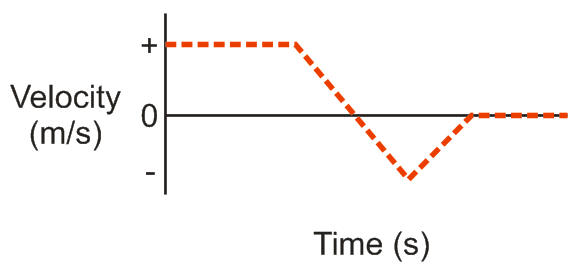
1. Where in the graphs is there acceleration (any change in velocity)?
2. When would the subject be speeding up? Slowing down?
3. On some paper, sketch a corresponding position vs time graph. [Assume that motion away from the sensor is positive, and motion toward the sensor is negative.]
Today:
- Check/review homework.
- Mention new pass system
- Quiz over kinematics formulas
- More information about the course.
- Notes: p.9: graphing motion, etc. Video of Notes from last year
- Do some practice together -- p.10
- Take a look at the rocket project?
- Work time
Links:
Homework: Two things...
- Finish the rest of the motion graphs -- page 10 and the top half of page 11. Answer Key to Entire Handout Video Help
 Class
2: Fri or Mon 8/28 or
8/31
Warm Up: Suppose you're involved in a 2 lap race. If you want your overall average speed to be twice as fast as your speed for the first lap, how much faster do you have to go during the 2nd lap? Solution -- don't peek!
Today:
- Check/review homework.
- Another practice problem -- an example of choosing different
starting and ending points --
 (Template)
Video
from class
- Fill out Student Information Sheets -- B5/6 only
- Motion Matching Activity -- do the activity and answer the questions on page 8 of the packet. Work in groups of no more than 4 students. Alternate group members attempting the challenges. The point is to make sure that you can perform the motions and understand the graphs. Answer the questions as you go or after you're done.
- Work time while everyone finishes the motion matching activity.
- Review page 8 -- preview of motion graphing (p.9)


Links:
Homework: Two things...
- Just after I said I don't usually give quizzes! -- Tiny quiz next class: Memorize the four kinematics formulas at the top of page 4 (two formulas for average velocity, one for acceleration, and one for change). You can keep retaking this quiz until you get the score that you like.
- Complete the rest of Kinematics Problems Practice -- #3-7 on p. 5-7 of the handout. Do what you can and mark anything that you couldn't do -- so you can review it before the test. We will go over the homework together, next class. Answer Key to Entire Handout
Physics 200: Mr. Stapleton
Warm Up:
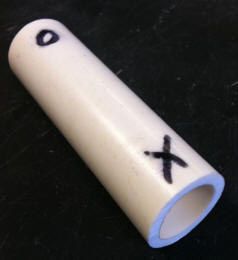 Spin
one of the "sprotating cylinders" by pressing one end until it squirts
out from under your finger. Try pressing the other end.
When the cylinder is spinning, why do you only see the symbol that you press?
Today:
- Quick business to take care of:
- Attendance -- learn names/pronunciations
- Around the room: sign-out sheets, passes, recycling, trash, cabinets (off limits without permission)
- Don't worry. This class won't be too hard. :-)
- Website -- see if you can access it -- and YouTube playlist
- Quick Preview
- Forces and Linear Motion (water rockets)
- Forces and Motion in Circles (rubber band cars)
- Electricity and Magnetism (magnetic pickups)
- Sound and Waves (electric and acoustic? instruments)
- Briefly discuss homework grading (and grading in general).
- First test -- Somewhere around Class #7 -- mid-september
- Get the Unit 1 Packet:
- Today's Notes: Kinematics p.1-3 Video of the notes.
- Work time (hopefully, but maybe not much in A5/6, due to the Wednesday schedule)
Links:
Optional Online Textbook Reading:
Homework:
- Kinematics Problems Practice #1-2. Do what you can and mark anything that you couldn't do -- so you can review it before the test. We will go over the homework together, next class. Answer Key to Entire Handout