Warm Up:
Volts = Joules of energy per Coulomb of charge
Amps (Current) = Coulombs of charge per second
Volts x Amps = Joule's of energy per second = Watts (Power)
In the left circuit, below, a 2hp table saw and a 100W bulb are wired in an ordinary parallel household circuit providing 120V. In the second circuit, they are wired in another 120V circuit, but they are wired in series. In the parallel circuit, the table saw consumes 2hp of power (1492W), and the light bulb consumes 100W of power. How much does each consume in the series circuit?
Today:
- Test
Homework:
- Finish the rest of the problems in Unit 8 Handout -- Electricity (PDF)
Warm Up: Equivalent Resistances -- a quicker trick than Kirchoff's Rules...
To solve this circuit, we can treat all three of the
Req= Ohm's Law (a very important law) can be written I = V/R
Today:
- Test
Homework:
- Follow along with this video to complete the problems on p. 4 and the top of p. 5. Then complete the problem on the bottom of page 5 on your own. If you need help with the bottom problem, follow along with me in this video. Unit 8 Handout -- Electricity (PDF)
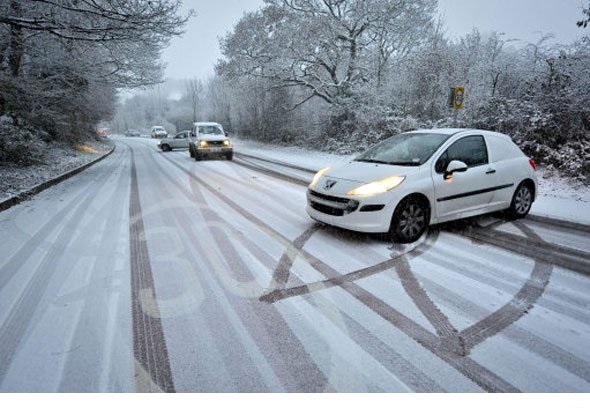 1. Do cars use kinetic friction or static
friction to stop? Explain.
1. Do cars use kinetic friction or static
friction to stop? Explain.
2. If two otherwise identical cars used the different forms of friction (one kinetic, the other static) to stop, how much difference would there be in the stopping distance?
| Approximate Coefficent of Static Friction | Approximate Coefficient of Kinetic Friction | |
| Tires on Dry Asphalt | 0.8 | 0.7 |
| Tires on Wet Asphalt | 0.5 | Unclear ("slightly lower") |
| Snow tires on "Black Ice" | 0.2 | 0.15 |
 Class
10: Friday,
9/26/25
Class
10: Friday,
9/26/25Warm Up: We have a force plate that will give us a graph of force vs time. Can we use it to determine the height of a jump?
 Class
11: Friday,
9/26/25
Class
11: Friday,
9/26/25Warm Up:
The 2nd diagram on the right is a System Schema representing the situation in the top diagram, where the "objects of focus" are the blocks. For simplicity, the creator of the diagram has assumed that the blocks are frictionless but the person is still pushing them somehow.
1. What is a system, in Physics?
2. What does a system schema show? In a system schema, what is the difference between the "objects of focus" and the other objects?
3. How can a system schema clarify the application of Newton's 2nd and 3rd Laws to solving problems in situations like this?
4. Let's create one for this
situation, with the objects of focus being the book and apple.

5. ... and another one for this situation: a chair is pushed across the floor by a student, with realistic friction. Assume that the student and chair are both objects of interest.
6. Use one of the previous system schemas (4 or 5) to create a "free body" diagram showing the forces acting on one of the objects of interest.
Today:
- Check/review homework
- 2nd (and final) launch
Homework:
- Rocket project practice problems
Warm Up:
Today:
- Create spreadsheets
- Rebuild rockets
Homework:
- Spreadsheet problems
Warm Up:
Today:
- Check/Review Homework
- Notes: Drag and terminal velocity
- Rocket rebuild
Homework:
- Drag problems
Warm Up:
Today:
- feather drop
- jump from pressure plate
Homework:
- Drag problems
Warm Up:
Today:
- Return tests -- review answers
- Newton Sled Activity (p.17-18, #1-5)
- Rocket rebuild
Homework:
- Newton Sled Problem(s) -- #6, p. 18-19
Warm Up:
None
Today:
- System Schema Diagrams
- Test
Homework:
- System Schema Diagrams
- Think about rocket improvements
 Class
6: Friday,
9/12/25
Class
6: Friday,
9/12/25Warm Up:
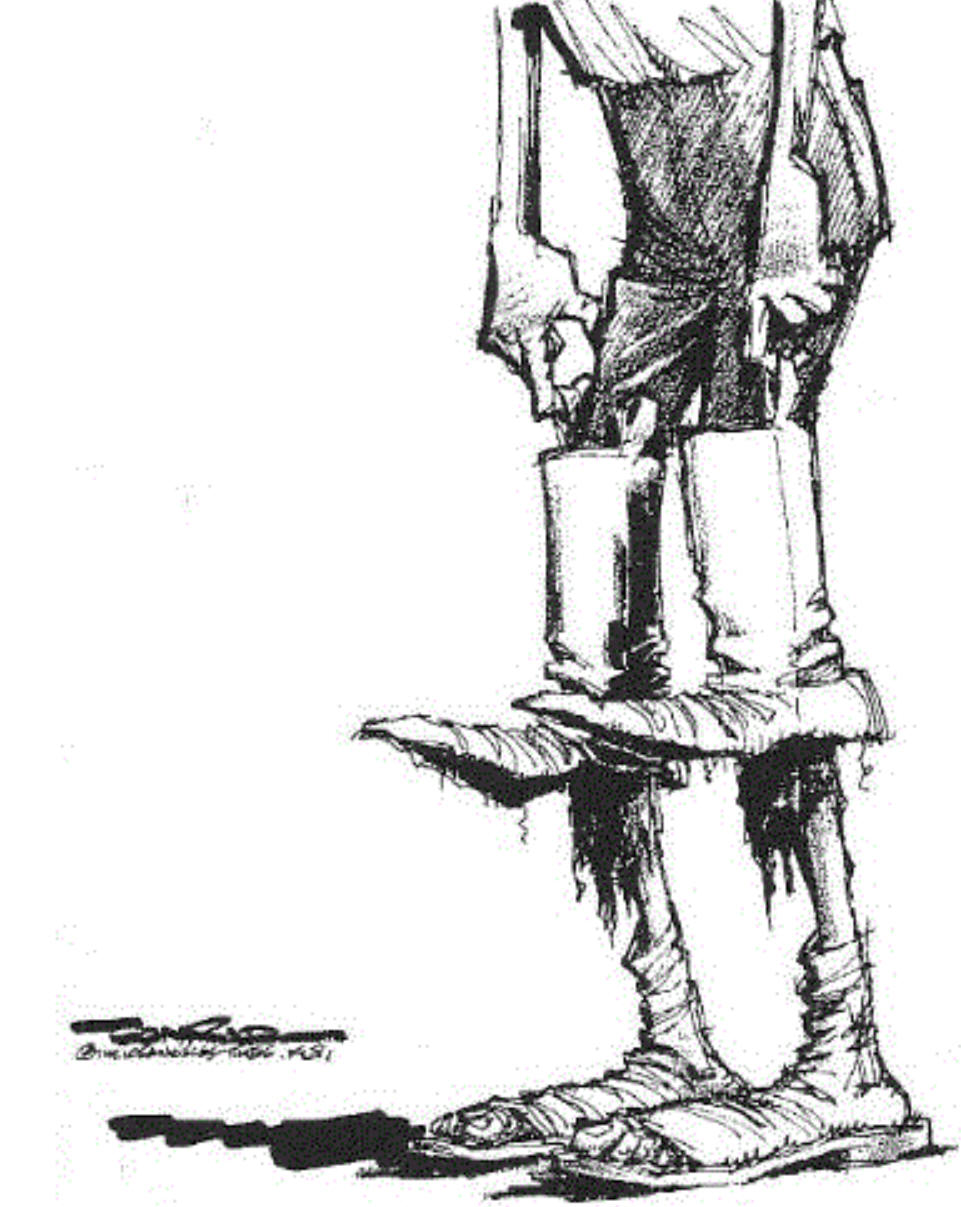
Is it literally possible to "pull yourself up by your own bootstraps?" What if you have superhuman strength and/or speed? Explain.
Today:
- Check/review homework
- Some test review
- Rocket launch
Homework:
- Study/Review: Test next class over everything in the handout up to this point
 Class
5: Wednesday,
9/10/25
Class
5: Wednesday,
9/10/25Warm Up:
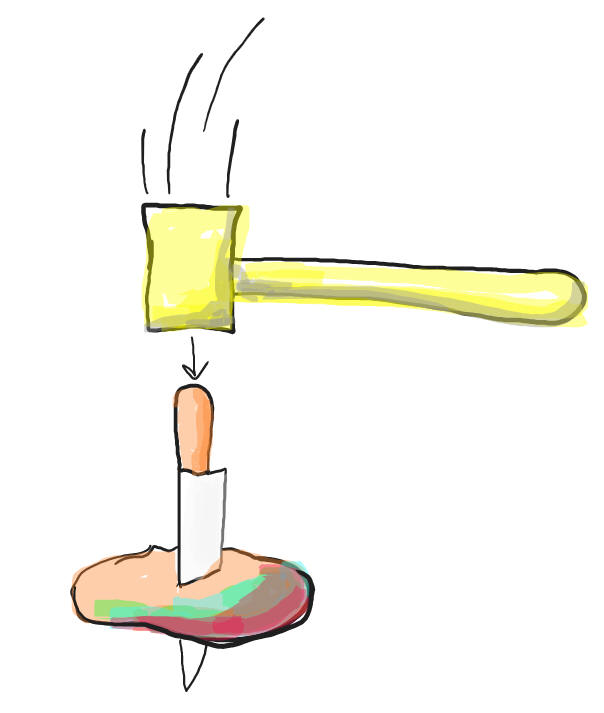
What will happen if I poke a knife through a potato, hold both objects in the air with the knife pointing downward, and then hammer the butt of the knife into the potato? Why? What if it's an apple, because I didn't have potatoes?
Today:
- Check/review homework
- Finish the rockets!
Homework:
 Class
4: Monday,
9/8/25
Class
4: Monday,
9/8/25Warm Up:
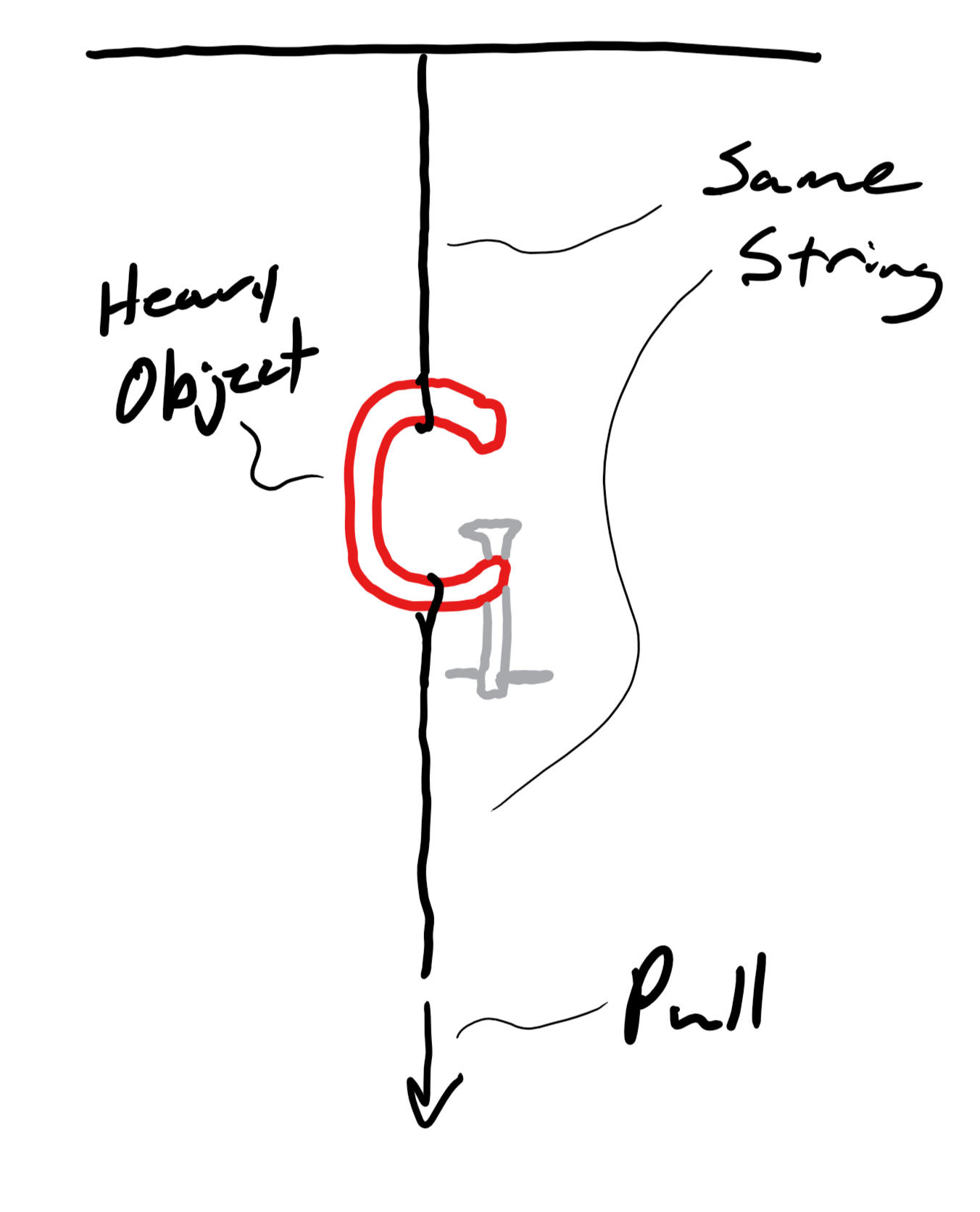
There is a heavy object suspended from the ceiling by a string. Another segment of the same string is hanging downward from the object. I am going to pull on the bottom string until one of the two strings breaks. Which string is going to break first? Why?
Today:
- Check/review homework
- Notes p.12-13: Newton's 1st and 2nd Laws of Motion
- Rocket Building Time
Homework:
- Practice problems 1-4 on p. 15